Infrared & Thermal Imaging Services
NFPA 70B Electrical Infrared Inspections
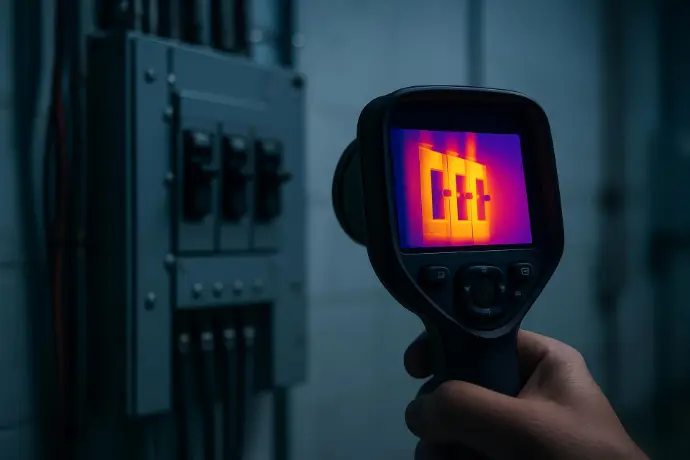
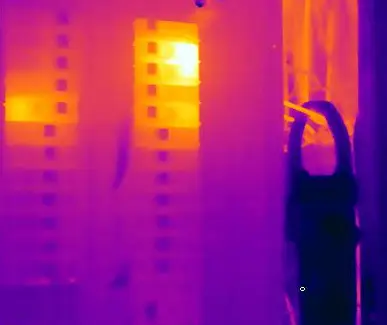
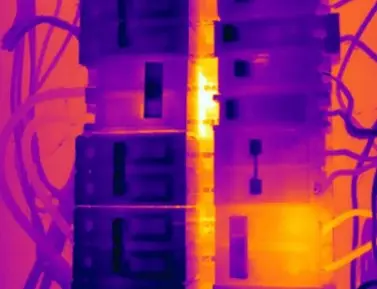
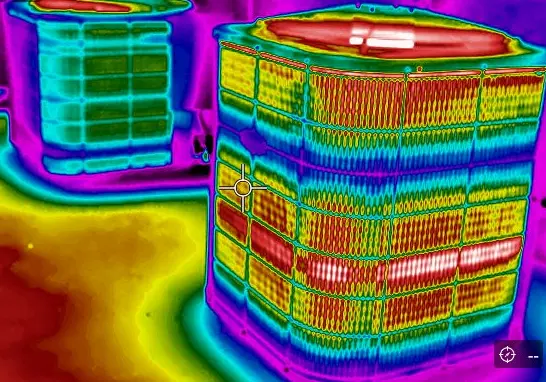
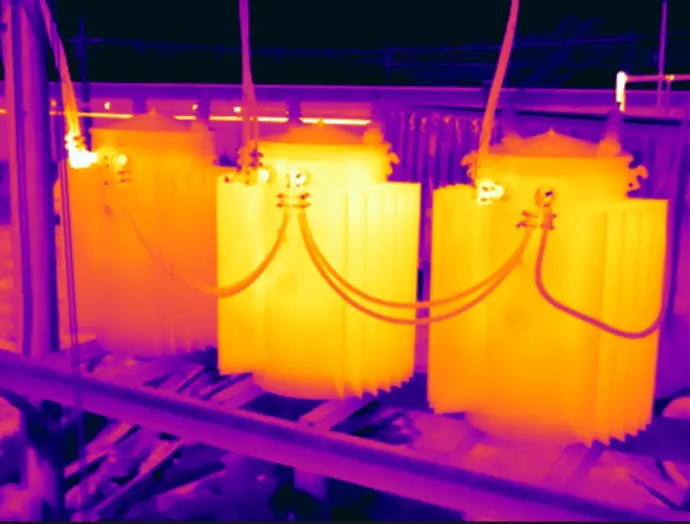
ProgUSA provides professional infrared thermographic inspections of electrical systems in alignment with NFPA 70B maintenance practices. Thermal imaging allows abnormal heat patterns to be detected before electrical failures occur.
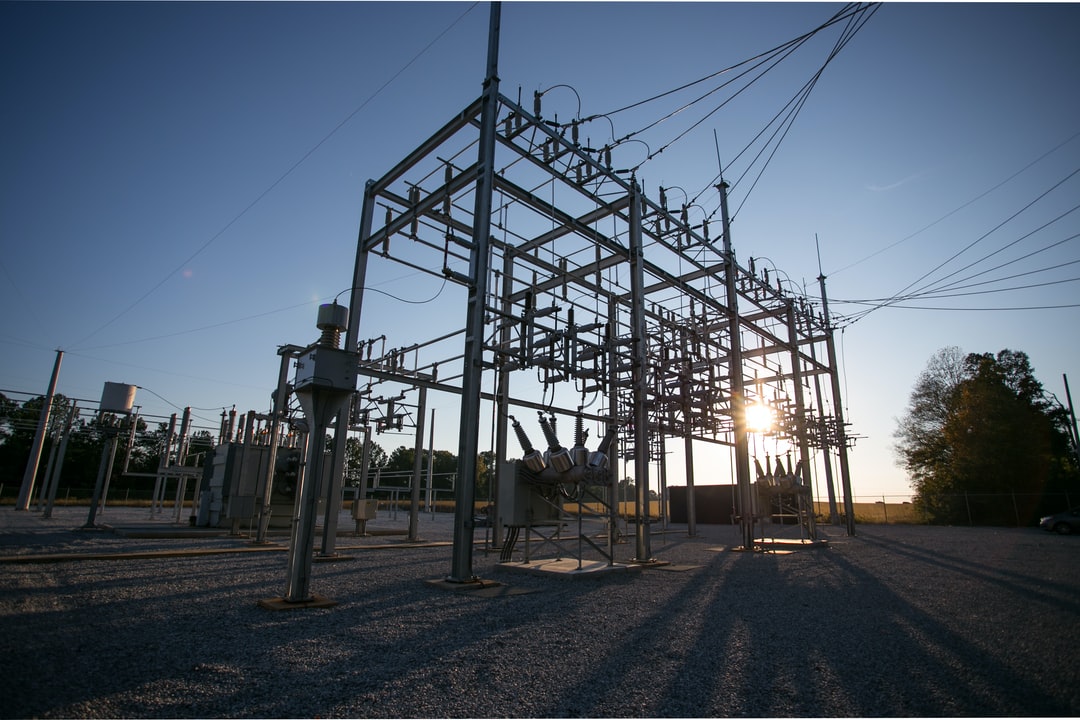
Electrical assets commonly inspected:
• Switchgear
• Panelboards
• Transformers
• Motor Control Centers (MCCs)
• Bus ducts
• Breakers and disconnects
Thermal anomalies commonly identified:
• Loose electrical connections
• Phase imbalance
• Overloaded circuits
• Failing components
Early detection helps prevent equipment failure, reduce arc flash risk, and support NFPA 70B preventive maintenance programs.

Each inspection includes a structured report containing:
• thermal images
• measured temperature differentials
• severity classifications
• recommended corrective actions
These inspections support preventive maintenance programs, insurance documentation, and ongoing safety compliance.
Advanced Thermal Imaging Technologies
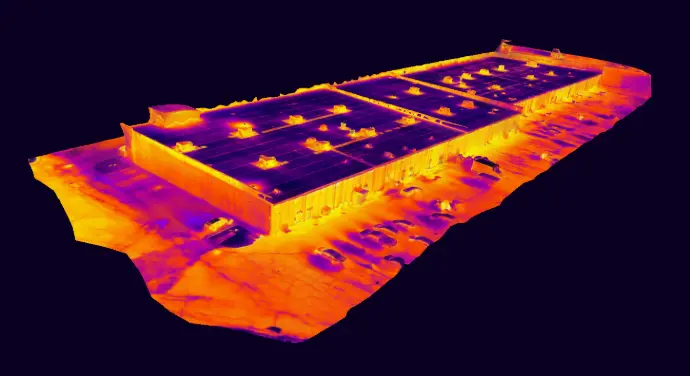
PATENTED 3D DRONE MAPPING
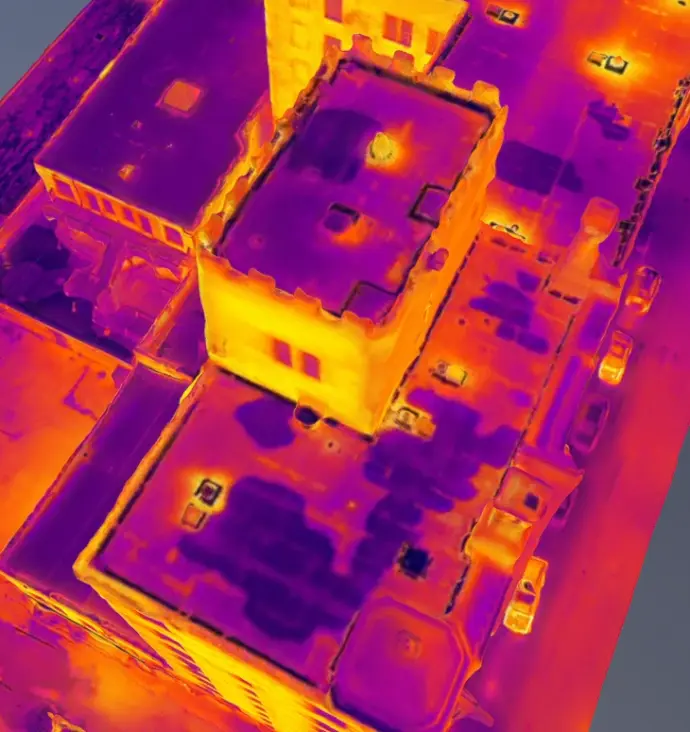
Our patented 3D infrared imaging system integrates high-resolution thermal data with spatial mapping to create a precise layered view of large facilities and infrastructure.
This technology allows us to identify thermal anomalies related to:
• energy loss
• moisture intrusion
• insulation breakdown
• structural envelope deficiencies
By correlating thermal imagery with three-dimensional mapping, areas of concern can be accurately located and quantified across large or complex environments.
The result is a detailed assessment that supports data-driven maintenance decisions, improved energy performance, and long-term asset reliability.
NFPA 70B ELECTRICAL SCANS
Electrical Asset Infrared Imaging
Our electrical infrared inspection services are performed in alignment with NFPA 70B maintenance standards. Thermal scans are conducted on critical electrical assets under normal operating load to identify abnormal heat patterns associated with loose connections, phase imbalance, overload conditions, and component deterioration.
Early detection of thermal anomalies helps facilities reduce unplanned outages, lower arc flash risk, and extend the service life of electrical equipment.
Each inspection includes a structured report with thermal images, measured temperature differentials, severity classification, and recommended corrective actions consistent with NFPA 70B maintenance documentation practices.
These inspections support preventive maintenance programs, insurance documentation requirements, and ongoing electrical safety compliance.
Inspections are performed by Level II certified thermographers using 640×480 or higher resolution cameras.
Roof Leak Detection & Moisture Mapping
GPS ROOF LEAK LOCATION
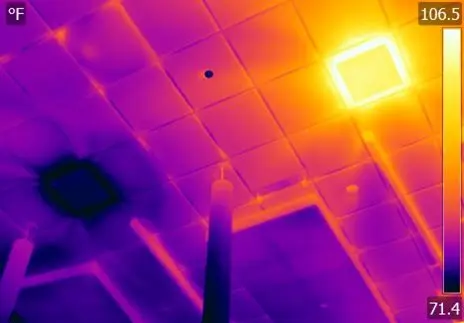
Thermal roof inspections allow hidden moisture to be identified without destructive testing.
Our inspections document findings with precise location mapping, enabling contractors and facility teams to pinpoint affected areas and perform targeted repairs. Infrared imaging helps identify:
• trapped moisture
• insulation deterioration
• hidden roof leaks
• developing envelope failures
Early detection allows repairs to be made before widespread damage occurs, helping facility owners avoid costly roof replacement and control capital spending.
Preventive Maintenance IR Programs
Many facilities implement recurring thermographic inspection programs to maintain electrical reliability.
Our preventive maintenance programs help organizations:
• track equipment condition over time
• monitor temperature trends
• support insurance and compliance requirements
• reduce unexpected electrical failures
Inspection schedules can be structured annually, semi-annually, or quarterly depending on facility risk profile and operational requirements.
Building Envelope & Energy Loss Analysis
Building Science Infrared Imaging
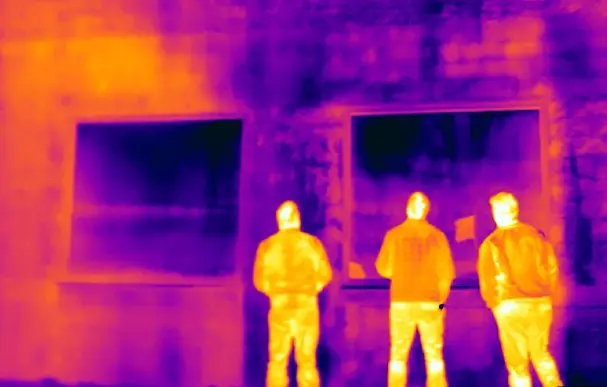
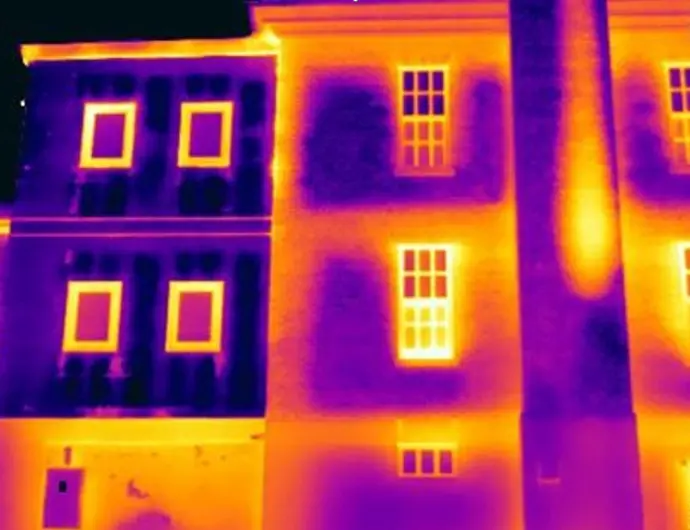
Building science thermal inspections provide insight into hidden conditions that affect energy efficiency and building durability.
Using high-resolution infrared imaging, we detect:
• air leakage
• insulation deficiencies
• thermal bridging
• moisture intrusion patterns
• trapped moisture within wall and roof assemblies
Identifying these conditions early helps reduce energy waste, prevent material degradation, and support long-term facility performance.
When to Consider Thermal Imaging
- Electrical equipment is aging
- Facility electrical load has increased
- Nuisance breaker trips occur
- Insurance carriers require inspection documentation
- Commissioning new installations
- Preparing for seasonal or peak load events
Our Process
- Pre-Inspection Planning
- On-Site Thermal Capture
- Load Condition Verification
- Image Analysis
- Clear Reporting & Corrective Recommendations
All inspections are performed under proper load conditions to ensure meaningful results.
- Utilities & Co-ops
- Industrial Manufacturing
- Commercial Buildings
- Data Centers
- Electrical Service Contractors
WATER INTRUSION & ENERGY LOSS
Building Science Infrared Imaging
Our building science infrared inspections provide measurable insight into envelope performance and hidden conditions that affect energy efficiency, durability, and operating cost.
Using high-resolution thermal imaging, we identify air leakage, insulation deficiencies, thermal bridging, moisture intrusion patterns, and trapped moisture within wall and roof assemblies. These conditions can contribute to energy loss, material degradation, and mold development if left unaddressed.
By detecting performance issues early, we support informed repair planning, extended asset life, and more controlled maintenance spending for facility owners and operators.